

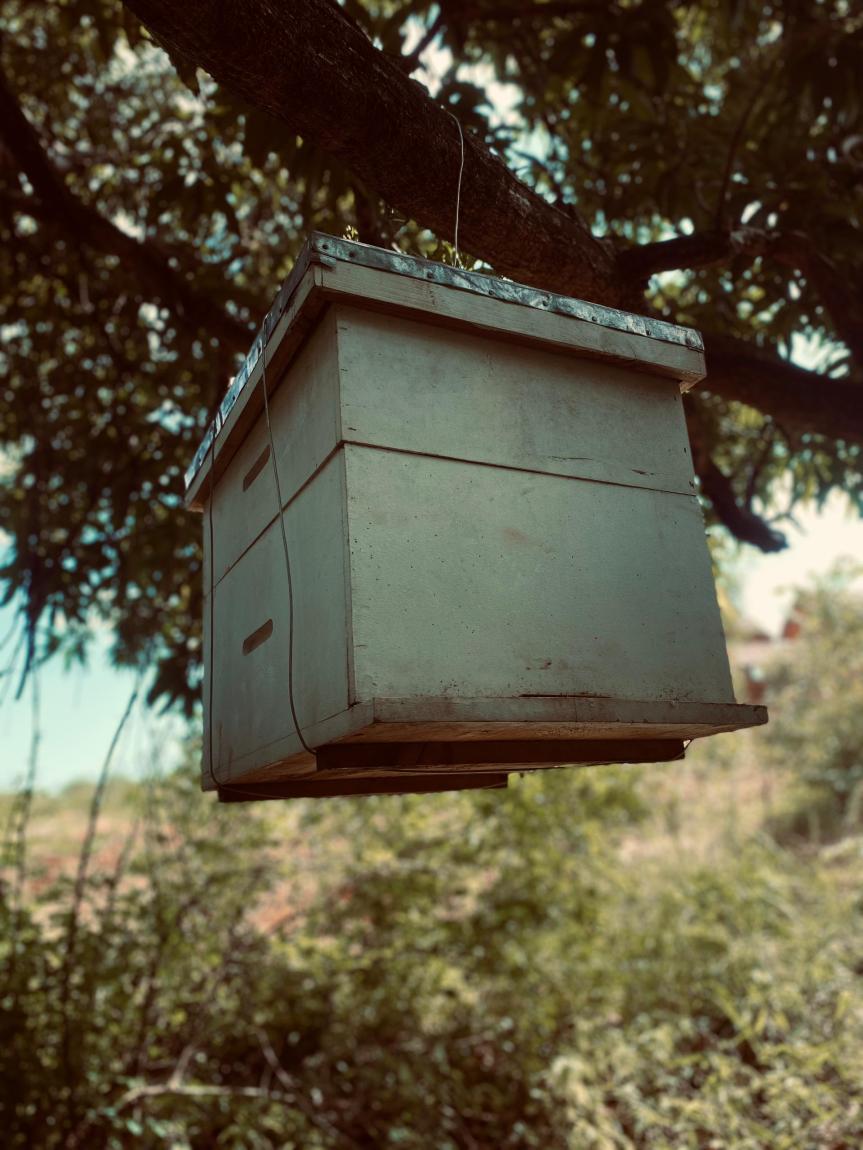
In the bustling landscape of agricultural entrepreneurship, few endeavors encapsulate the harmony of ecological stewardship and economic viability quite like bee farming. At the heart of this burgeoning industry is a commitment to not only harnessing the sweet nectar of honey but also safeguarding the delicate balance of ecosystems through pollination.
Enterprising minds like Richard Adeson Nchimbi, a recent graduate with a degree in Beekeeping Science and Technology, are leading the charge.
Inspired by a lifelong dedication to environmental stewardship and community empowerment, Richard has forged a path in Tanzania, where the buzz of bees resonates with promise. In this exclusive interview, Richard sheds light on their innovative bee farming operation aptly named The Hive Bee Farms Project, where he is founder. He talks about the challenges they face, and their unwavering dedication to sustainable practices.
1. Can you provide an overview of your bee farming operation and what inspired you to start it?
Being a recent university graduate with a degree in Beekeeping Science and Technology served as a major source of inspiration for me, but I was also inspired by my lifelong desire to make a positive impact on Tanzanian communities and the environment.
Since bees are vital pollinators, the project as a whole protects them and their homes, which benefits the environment. It also benefits the employment sector by creating jobs that can be filled temporarily or permanently.
The two distinct apiaries, or places where bees are maintained, have varied geographical and meteorological characteristics, which accounts for the differences in the beekeeping calendars that we use to plan our daily activities and oversee the whole operation.
The modern beekeeping system’s guiding principles are adhered to when performing beekeeping operations. This covers the use of contemporary hives to ensure that we have an appropriate supply of goods and, in addition, that we preserve the environment and bees. To get here, a lot of work needs to be done.
We currently only make honey, bee pollen, and beeswax, but we have plans to deal with the remaining products—bee venom, royal jelly, and bee colonies—in the future.
2. What sets your bee farming practices apart from others in the industry?
When the Principles of Modern Beekeeping are applied, the variations become apparent.
Although these ideas are significant, it’s remarkable how often they are disregarded. They are truly ignored by people.
I have no excuse as a professional for not following the rules set forth by my profession.
Since everyone needs to make money in the end, I do what I must to protect the environment, the bees, and the project as a whole. I accomplish this by adhering to those ideals.
3. Could you describe the types of bees you work with and their roles within your operation?
We are now just working with stinging bees (Apis Mellifera). Since they are the source of all beekeeping products, they are the main producers. Our sole operation regarding the products is to include them in the value chain. But because they are the top pollinators, it is important to remember that they also contribute significantly to the ecosystem.
4. How do you ensure the health and well-being of your bee colonies?
Our primary concern is the health of the bee colonies.
Normally, we visit the hives to look for diseases and pests. If any pests are found, we take steps to control them without endangering the bees. Regarding diseases, the colonies receive treatment, and precautions are taken to prevent infections from spreading from sick colonies to healthy colonies.
5. What challenges do you face in bee farming, and how do you overcome them?
The diseases and pests that infest the colonies present challenges, although these are frequently seen and may be prevented. Treatments are available for the diseases.
The hardest problems to solve are the ones caused by humans. The biggest difficulty facing the beekeeping business as a whole is the use of pesticides and insecticides in agricultural activities. It’s a global problem. The fight is never ending.
Additionally, we still struggle to raise money to assist us afford to acquire whatever is required for the operation, so there are some important pieces of equipment that we should be using in our everyday activities to make it more effective.
6. Can you discuss the importance of bees in agriculture and the ecosystem, and how your business contributes to their conservation?
As pollinators, bees are essential to agriculture.
A significant portion of the agricultural crops are pollinated by them.
They also aid in maintaining the equilibrium of the ecosystem.
Our part in helping to conserve these incredible animals is to give them secure housing, as well as bee folders—which they require to produce food—by maintaining a mix of native and introduced plants and by creating what are known as pollination gardens.
Making sure that the plants are always there for the bees is very important for their survival.
7. What sustainable practices do you implement in your bee farming operations?
There is no other option for us to ensure the sustainability of what we do than to put modern beekeeping’s principles into practice.
This entails using appropriate modern equipment, doing routine colony inspections, treating colonies when they get infected, using organic pest control techniques, maintaining a modern facility for processing beekeeping goods, and so on.
8. How do you handle the extraction and processing of honey from your hives?
The centrifugal honey extractor and additional tools, like an uncapping knife and hive tools, are used to extract honey. Safety precautions, such as donning a bee suit or veils to avoid being stung, should also be taken into account.
Processing of honey is carried out in a modest processing facility with several machines performing various functions.
However, we have not purchased processing equipment; for the time being, we take the product to a processing factory and pay a little charge to have it processed.
We are preparing our own plan. We’re still gathering funds and hope to make it.
9. Could you share any innovative technologies or techniques you use to enhance beekeeping efficiency?
Right now, I’m creating a custom hive design. While it’s still a work in progress, I’m also researching organic insect repellents that can be used to manage other insects that are bothering bees, attempting to identify those that only affect pests rather than bees.
10. What advice would you give to individuals interested in starting their own bee farming business?
All I can do is advise them to stop thinking and to start instead.
It’s a wonderful thing to do for the environment’s health as well as the bees’. The global market is eager and prepared for bee products.
In a world where the hum of progress often drowns out the whispers of nature, bee farming stands as a testament to the enduring symbiosis between humanity and the environment. As the buzz of bees reverberates through fields and forests, so too does the promise of a more sustainable future—one hive at a time.
By Anne Tendwa
 The Tanzanian Times