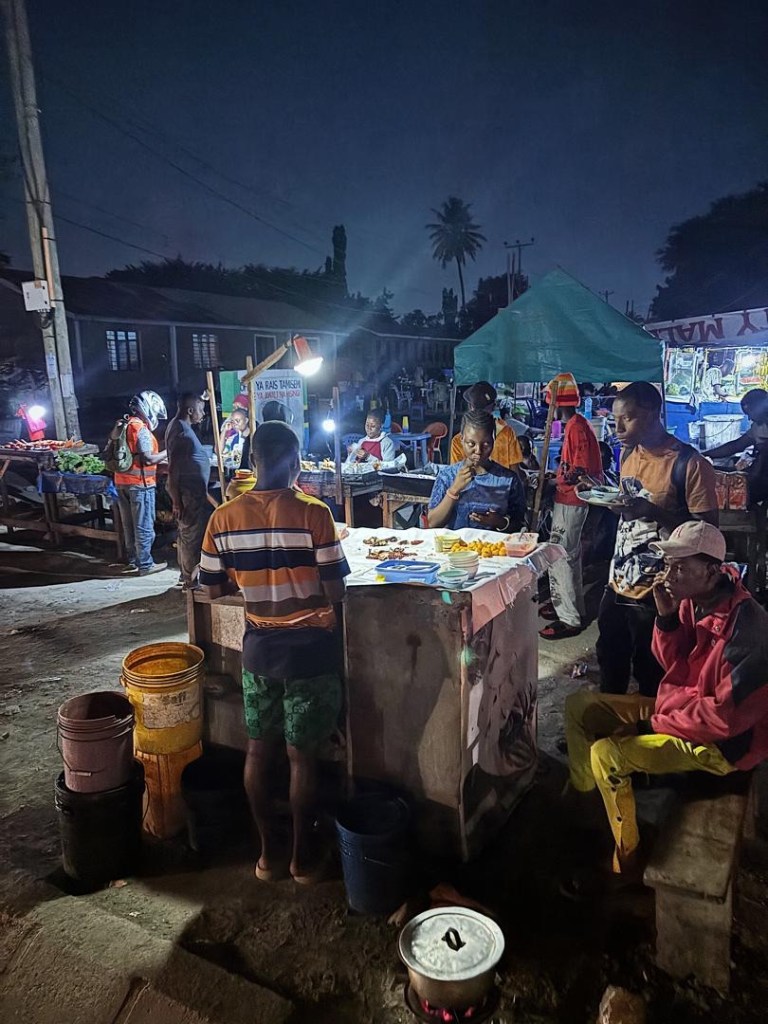
Evenings in the streets of Dar es Salaam with the vast food stalls feels like a survival game for your wallet, will it be safe tonight or will you go home knowing you have gone over the budget? You get down from the bus with one goal in mind, to reach home. However, you spot a table that sells seafood, and you lose focus. I am sure it has happened to most of us.
With these vibrant tables that sell seafood like calamari for two hundred shillings per piece, grilled beef on sticks famously known as ‘mishkaki’ and plantain smoked to perfection offered at five hundred shillings per piece. Hot chapatis served with different side dishes like beans and meat stew for a generous price of three thousand shillings and not forgetting the chips stalls that taste better than home-made chips, how can you resist?
To make these spots more attractive to passerby’s, vendors place benches, chairs and makeshifts table so their customers can sit. In exchange, meals are bought and discussions about social issues are made between strangers. “I didn’t plan on coming here, I was just passing then I saw the seafood table” said Edna while picking up more calamari pieces from the table with a toothpick. “I can spend almost two thousand shillings here, there are affordable, and they satisfy my cravings.”
While some people eat out in the streets because of cravings, others do so since it is the only affordable option. These spaces become more than food stalls, it is where some people have all their meals at times. According to Juma, a chapati seller in Tabata Shule, he starts making chapati around 7pm to target people who are coming back from work. Another passerby informs a person next to them, “we need to get fried fish, cook it and eat it with ugali and our day is over”.
That is the quiet truth, for those with minimum income, these vendors are essential. They make sure that the bajaj driver heading home after a long day driving and a university student have a chance to grab and eat a good meal even on a tight budget.
Street food vendors are a necessity, they are the ones who make it possible for thousands of Dar es Salaam residents to eat every day, without them, daily life in this city would be much harder.
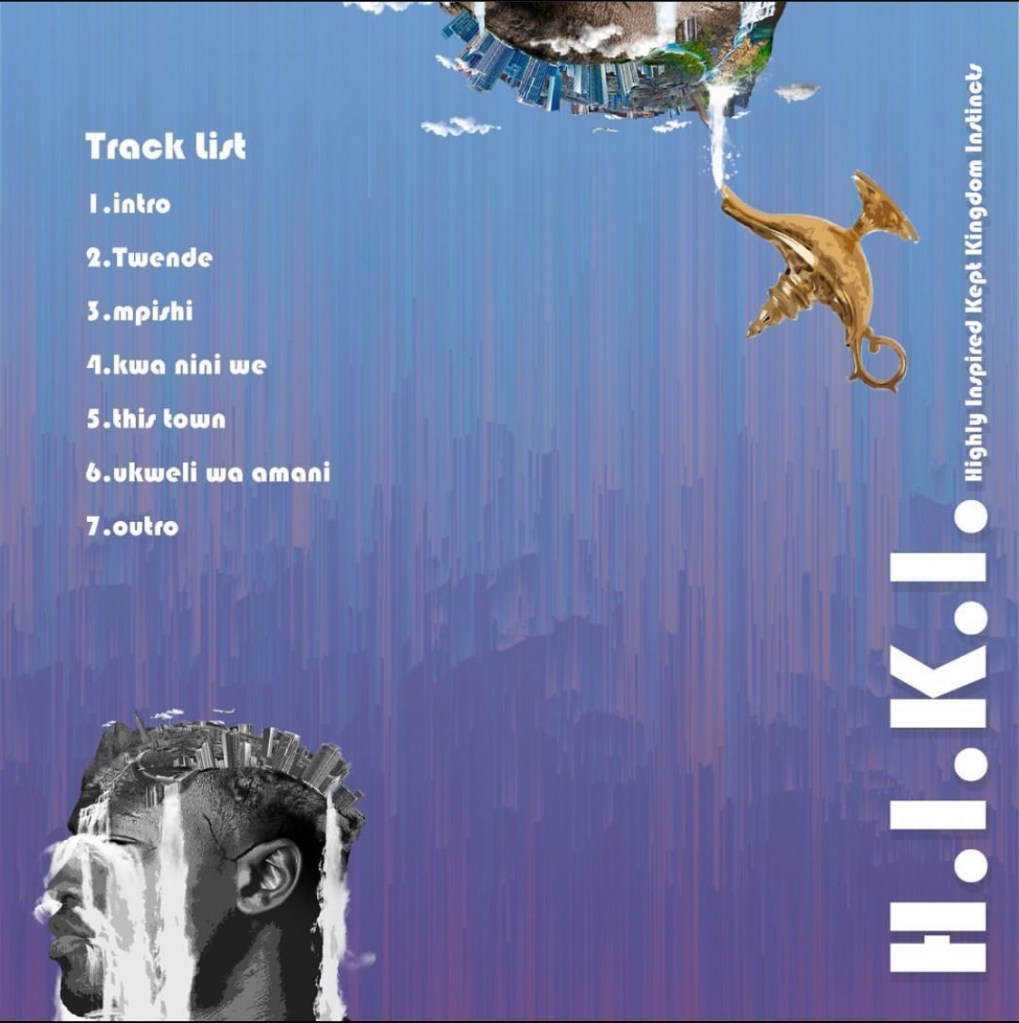
Released on February 8, 2023, the album H.I.K.I marks a significant creative step for the artist Ebreezy. The title itself — H.I.K.I — stands for High Inspired Kept Kingdom Instincts, giving us a glimpse into the conceptual framework behind the project.
Context & Artist Background
Ebreezy is an artist whose work spans multiple facets of modern musical expression, blending influences and personal narrative. While detailed biographical material isn’t copious, his discography shows a continuing evolution in both sound and ambition. The release of H.I.K.I comes after previous works such as “Girls Ain’t Innocent” (2022) and the EP Wat’s In The Vault Pt. 2.
By choosing the subtitle “High Inspired Kept Kingdom Instincts,” Ebreezy hints at a commitment to authenticity (“Kept”), sovereignty of self (“Kingdom”), and tapping into innate creativity (“Instincts”). The “High Inspired” portion suggests striving toward elevated vision or purpose.
Tracklist & Musical Flow
The album consists of eight tracks, totaling approximately 30 minutes. Here is the tracklist:
Intro (hapa)— 2:47 Twende — 4:00 Mpishi — 4:26 Kwanini We — 4:12 This Town — 3:50 Ukweli wa Amani — 4:19 Mawazo — 3:37 Outro (Paa/Ngangara)— 3:31
Musically, the album weaves through reflections on place (“This Town”), internal dialogue (“Mawazo” which means “thoughts” in Swahili), and a broader peace-seeking (“Ukweli wa Amani” translates roughly to “Truth of Peace”). The use of Swahili titles suggests cultural layering and invites listeners to interpret identity and experience through a diasporic or multilingual lens.
Themes & Highlights
Identity & Place: With songs like “This Town,” Ebreezy explores a sense of belonging or dislocation, perhaps both the literal and metaphorical town one inhabits and the internal town of self. Reflection & Instinct: Tracks such as “Mawazo” and “Kwanini We” (which could be interpreted as “Why Us?” or “Why You?”) delve into self-reasoning, questioning, and introspection. Peace & Truth: “Ukweli wa Amani” stands out for its thematic weight: truth and peace are presented as intertwined, suggesting a spiritual or philosophical core to the project. Cultural Language Play: The mixture of English with Swahili (and potentially other languages or influences) gives the album a textured feel, and invites listeners from varied backgrounds to engage with its layered meanings.
Production & Sound
The sound of H.I.K.I reflects precision, intention, and balance — eight tracks and thirty minutes of pure cohesion. Rather than reaching for commercial appeal, Ebreezy curates an experience that feels deliberate and tightly woven. Every beat, vocal layer, and instrumental texture speaks to a deeper vision: one rooted in instinct, collaboration, and authenticity.
Behind the scenes, a powerful creative collective helped bring that vision to life. Hardworknation Marketing Company provided unwavering support and direction, ensuring that every detail aligned with the project’s essence. The sonic craftsmanship unfolded across borders, with contributions from Soundking, Little Africa, Asili Sound, 6 Records, and E.F.N — connecting studios in Switzerland, Tanzania, and the United States.
The production energy of GQ, Kichwa Touch, Eric Wilson, Domi Beats, Black Culture, Sajo, and Rage Infinite Producer infused H.I.K.I with its dynamic texture and emotional resonance. Visually, Ezra Brown and Mr. Filly translated the album’s depth into a striking design that mirrors its spiritual and creative tone.
The project’s poetic and vocal layers were further elevated by Mac Leisian, Asteria Official (TZ Poets), MC Koba TZ, Britney Marie, and Torrence Bristaw, guided the coordination between process with precision each adding rhythm, reflection, and soul. Charissa Stephens harmonies added warmth and textedture to the soundscape , Abbas Max brother
Together, this collective transformed H.I.K.I into more than just an album — it became a movement. A manifestation of Highly Inspired Kept Kingdom Instincts, where intuition meets discipline and collaboration breathes life into art.
Listeners will notice a seamless blend of mid-tempo rhythms, introspective lyricism, and cultural inflections that set this project apart from mainstream releases. The album leans toward artful exploration rather than formulaic radio singles — though tracks like “This Town” show strong crossover potential. Songs such as “Mpishi” (“cook” in Swahili) reveal Ebreezy’s layered storytelling, using metaphor to speak about creativity, process, and self-evolution.
Why It Matters
It showcases an artist choosing intention over mass volume: shorter tracklist, maintained theme. It marries cultural roots (via language and titles) with universally relatable themes (identity, place, peace). It positions Ebreezy as someone to watch: creative, reflective, and unafraid of nuance. In a music landscape often driven by singles and streaming fluff, H.I.K.I stands out as a cohesive body of work.
Final Thoughts
H.I.K.I is more than an album—it is a statement. Through the lens of “High Inspired Kept Kingdom Instincts,” Ebreezy invites listeners into his world: one shaped by thought, culture, place, and purpose. Whether you’re drawn to rich lyricism, cross-cultural texture, or just good music that has something to say, this project is worth exploring.



 The Tanzanian Times